Current operations support a growing team.
Impact
Glass recovery with social and environmental value.
OCUVIDA turns discarded bottles into a cleaner material stream while supporting jobs, aggregator income, and community collection networks.
See growth case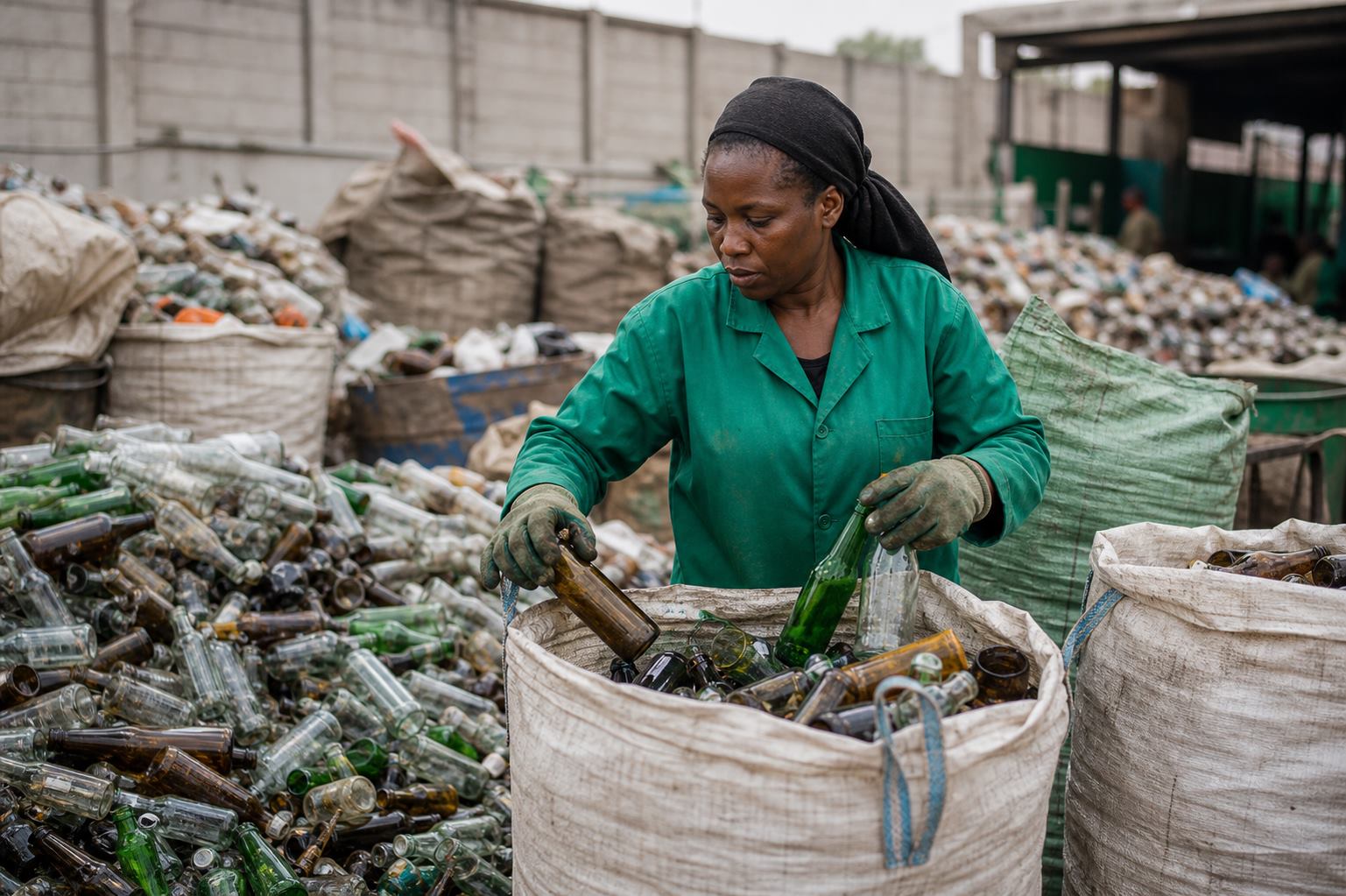 Recovered bottles create income and cleaner public spaces
Income from the work supports wider households.
Nairobi, Central Kenya, Eastern Kenya, Western, and Rift Valley.
Dedicated recovery for glass bottles.
Impact reporting
A clear reporting framework for growth.
As operations scale, OCUVIDA can track practical metrics that show material flow and community value: volume received, volume sorted, active aggregators, pickup routes, partner dispatches, jobs supported, and counties served.
EnvironmentalGlass diverted from landfills, drains, informal dumpsites, and open spaces.
EconomicMore reliable demand for aggregators collecting glass bottles.
OperationalCleaner sorted material streams for recycling and reuse partners.
SocialJobs, household support, and practical community participation.
Collection network
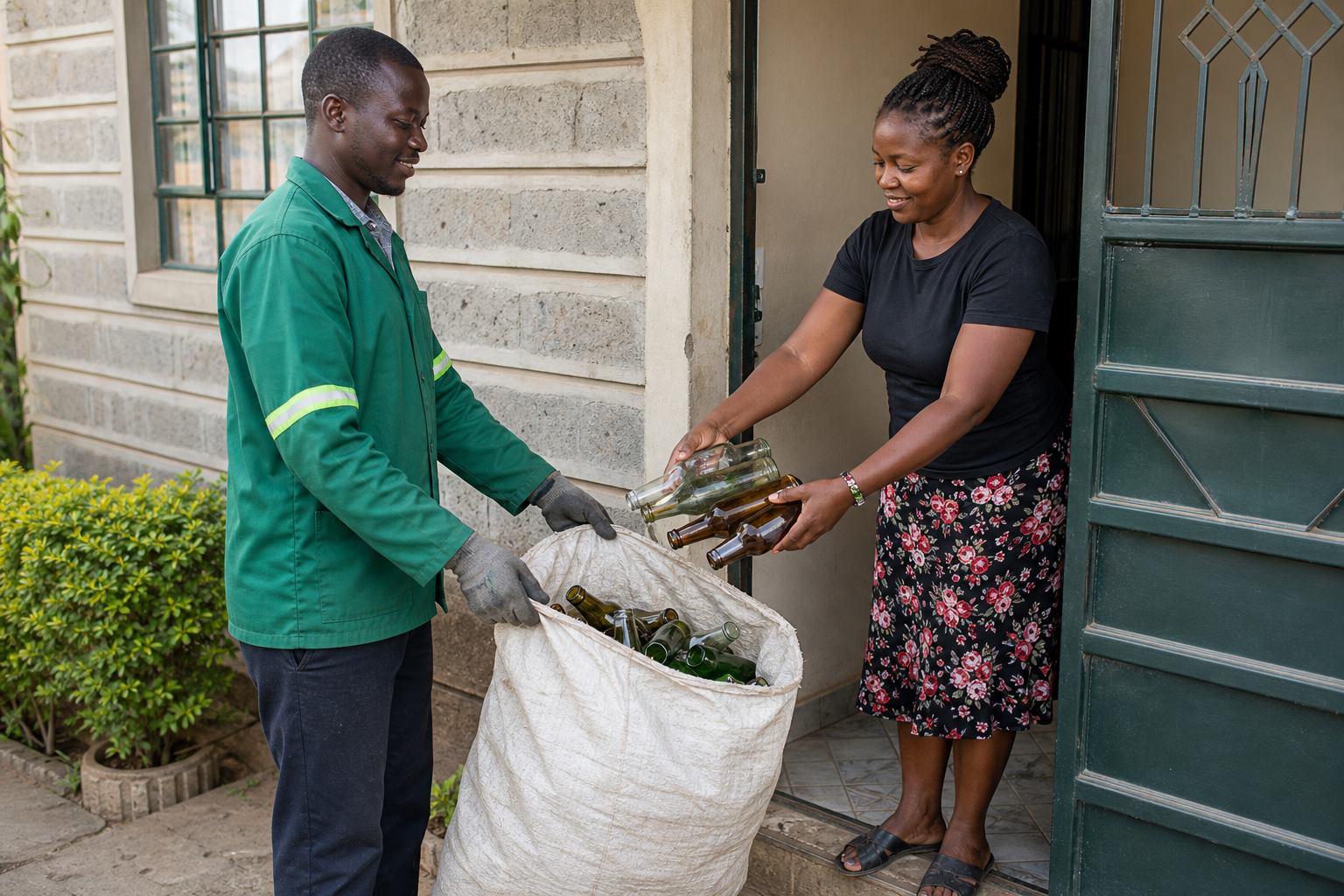
Impact begins before bottles reach the facility.
Glass recovery depends on people who collect from homes, businesses, informal recovery points, and aggregator networks. OCUVIDA's role is to connect that work to a more reliable receiving, sorting, and recycling pathway.
See operations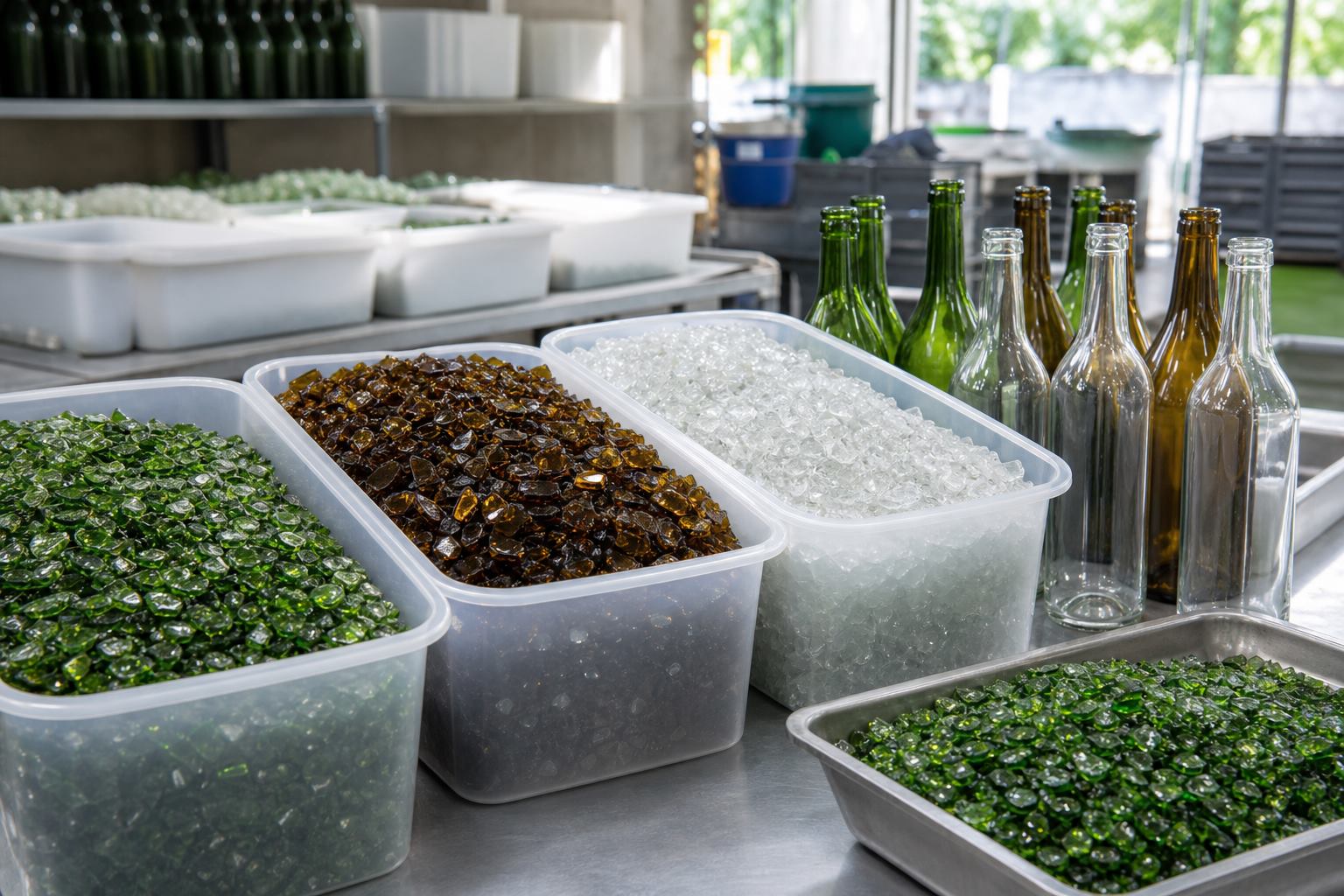
Impact story
Cleaner glass creates value at every stage.
When glass is collected separately and sorted well, it becomes easier to recycle, reuse, and upcycle. That improves the economics for aggregators and makes the downstream material more useful to partners.
BeforeBottles are scattered, mixed, heavy to transport, and often treated as waste.
DuringAggregators consolidate material and OCUVIDA sorts it into usable streams.
AfterPrepared glass can move toward recycling and reuse instead of disposal.